
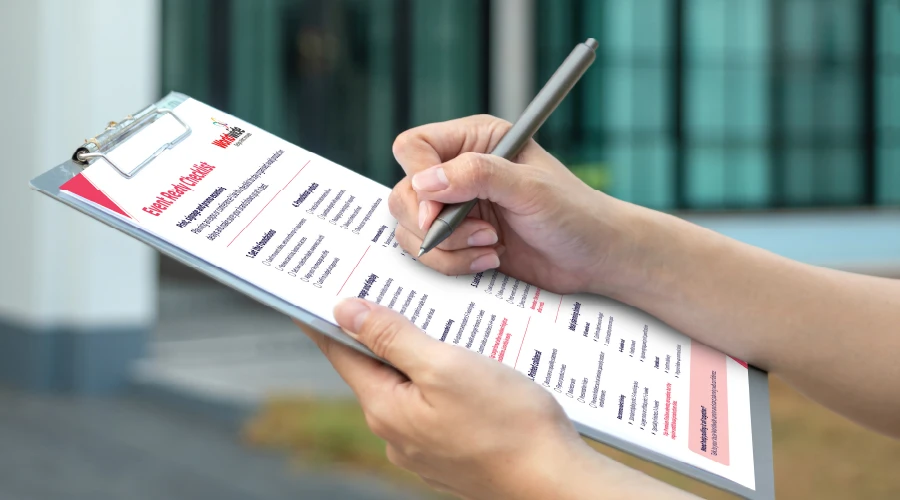
Planning an event or exhibition involves a lot of moving parts.
From signage and printed collateral to promotional products and follow-up marketing, there are many details that need to come together at the right time.
To make the process easier, we’ve created a simple Event Ready Checklist you can download and use when preparing for your next expo, conference or trade show.
This practical guide helps ensure your brand shows up professionally, your materials are ready on time, and you avoid last-minute production stress.
Events can deliver excellent marketing results, but only when they are properly planned. Many of the materials used at exhibitions such as signage, printed collateral and promotional products all have different production timelines.
Leaving decisions until the last minute can lead to rushed artwork, limited product options or unnecessary stress in the lead-up to the event.
Planning ahead helps you:
Ensure signage and display materials are ready for bump-in
Allow enough time for printing and finishing
Secure promotional products that align with your campaign
Prepare a clear follow-up strategy for leads generated at the event
Our Event Ready Checklist helps you work through these steps in a simple, structured way.
The checklist is organised into the key areas most businesses need to consider when preparing for an exhibition or conference.
Good event planning starts with the basics. Before any artwork or production begins, it is important to confirm details such as the event dates, venue requirements, stand layout and overall objectives.
Whether your goal is generating leads, building awareness or launching a new product, aligning your messaging early will help guide the rest of your event marketing.
Exhibition signage is often the first thing attendees notice when they walk onto the floor.
The checklist prompts you to consider the types of display materials that may be required for your stand, from large-format backdrops through to directional signage and supporting display elements.
It also highlights typical production timeframes so you can allow enough time for design, printing and installation.
Printed materials still play an important role at events. Brochures, flyers and other collateral give attendees something tangible to take away and review after the event.
The checklist helps you plan the types of printed materials you may want available at your stand, along with considerations such as quantities, finishing options and production timelines.
If you are planning to use premium finishes or specialty stocks, allowing extra time for production is essential.
Promotional products can help your brand stay visible long after the event finishes.
The checklist encourages you to think about the type of items that will be useful to attendees, how many you may need based on expected traffic, and the time required for branding or custom sourcing.
Custom promotional products can take several weeks to produce, so planning early gives you more flexibility and better results.
One of the most overlooked parts of event marketing is what happens after the event.
Capturing leads is important, but the real return often comes from your follow-up strategy. Preparing your follow-up communications in advance helps ensure no opportunities are missed once the event is over.
To help with planning, the checklist also includes a recommended event preparation timeline.
8–10 weeks before the event
Confirm objectives and budget
Lock in any custom promotional products
4–6 weeks before the event
Finalise artwork
Approve signage and print specifications
2 weeks before the event
Confirm delivery timelines
Prepare follow-up communications
Following a structured timeline like this can help reduce last-minute stress and ensure everything arrives when it is needed.
If you are planning an upcoming expo, conference or trade show, this checklist is a simple way to stay organised and avoid missing important details.
"*" indicates required fields